You wake up one morning, look in the mirror, and notice it: your skin has lost that natural glow it once had. It looks dull, tired, slightly dehydrated — even after a good night’s sleep. This is a reality many people face, regardless of age. Stress, environmental pollution, sun exposure, and the natural ageing process all contribute to a gradual decline in skin quality.
This is where skin boosters come in. Over the past decade, these injectable treatments have become one of the most sought-after procedures in aesthetic medicine — and for good reason. But what exactly are they? How do they work? And most importantly, are they right for you?
This article answers all your questions clearly and comprehensively.
What Exactly Are Skin Boosters?
Skin boosters are injectable treatments designed to deeply hydrate and revitalise the skin from within. Unlike traditional dermal fillers, whose primary goal is to restore volume or fill wrinkles, skin boosters work at the level of the dermis itself, improving the overall quality, texture, and radiance of the skin.
Several types of skin boosters are available today:
- Hyaluronic acid-based boosters — the most widely used category, including well-known products such as Restylane Skinboosters, Juvederm Volite, and Profhilo. They deliver intense hydration and stimulate collagen production.
- Polynucleotides (PDRN) — derived from purified DNA fragments, they promote tissue regeneration and improve skin tone.
- Vitamins, peptides, and amino acids — often used in combination to nourish and energise skin cells.
- Exosomes — a newer, cutting-edge approach that uses cell-derived vesicles to stimulate skin repair at a molecular level.
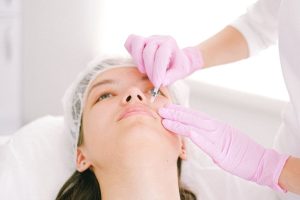
Skin boosters are typically administered through micro-injections directly into the dermis, though some protocols also use micro-needling or advanced topical delivery systems. The technique may vary depending on the product used and the practitioner’s approach.
How Do Skin Boosters Work? The Science Behind the Glow
To understand why skin boosters are so effective, it helps to understand what happens to your skin over time.
Hyaluronic acid (HA) is a naturally occurring molecule in your skin that can hold up to 1,000 times its weight in water. As you age, your body produces less of it — which is why skin becomes drier, thinner, and less elastic. Micro-injections of hyaluronic acid replenish this deficit, restoring deep hydration and creating a plumping effect from the inside out.
But the benefits go beyond simple moisture. Hyaluronic acid injected into the dermis also stimulates fibroblasts — the cells responsible for producing collagen and elastin. Over the weeks following treatment, these cells become more active, leading to a gradual improvement in skin firmness, elasticity, and overall texture.
This is what distinguishes skin boosters from traditional fillers: rather than simply filling a hollow or smoothing a line, they act as biostimulators, triggering your skin’s natural regenerative processes. The result is not just a temporary fix, but a genuine improvement in skin quality that develops progressively over time.
Who Are Skin Boosters For?
Skin boosters are suitable for a wide range of patients, but they are particularly effective for those dealing with:
- Dull, dehydrated skin that lacks radiance despite proper skincare
- Fine lines and surface texture irregularities caused by loss of hydration
- Early signs of skin laxity, particularly in the mid-face, neck, and décolletage
- Post-summer skin damage or skin affected by environmental stress
When it comes to age, skin boosters can be used both preventively (from around the age of 25–30, to maintain hydration and slow early ageing) and correctively (in patients over 40, to visibly improve skin quality and radiance).
The most commonly treated areas include the face, neck, décolletage, and hands.
That said, skin boosters are not appropriate for everyone. Contraindications include pregnancy and breastfeeding, active skin infections or inflammation in the treatment area, autoimmune disorders, and known allergies to product components. A thorough medical consultation is always required before any treatment.
What to Expect: Before, During & After
Before the session, you will have a detailed consultation with a qualified practitioner — a medical doctor, aesthetic physician, or plastic surgeon. This appointment is essential. It allows the practitioner to assess your skin, understand your goals, and recommend the most appropriate product and protocol.
During the session, a topical anaesthetic cream is typically applied 20 to 30 minutes beforehand to minimise discomfort. The injections themselves are performed using a very fine needle, across multiple points in the target area. A standard session lasts between 30 and 45 minutes.
Immediately after, you may notice small red bumps at the injection sites (known as « papules »), mild redness, and occasional bruising. These effects are temporary and generally resolve within 24 to 72 hours. You can return to your normal activities the same day, though it is advisable to avoid intense heat, exercise, and direct sun exposure for 48 hours.
Most protocols involve 2 to 3 sessions spaced 3 to 4 weeks apart. Visible improvements typically appear 4 to 6 weeks after the first session, as the skin gradually restores its hydration levels and collagen production increases. Results generally last between 6 and 12 months, after which a single maintenance session is recommended.
Skin Boosters vs. Other Aesthetic Treatments
Skin boosters are one tool among many in aesthetic medicine. Here is how they compare to other common treatments:
| Treatment | Primary Goal | Mechanism |
|---|---|---|
| Skin Boosters | Hydration, radiance, texture | Deep dermal hydration + biostimulation |
| Dermal Fillers | Volume restoration, contouring | Physical filling of tissue |
| Mesotherapy | Skin nourishment | Superficial microinjections of vitamins/minerals |
| PRP (Platelet-Rich Plasma) | Regeneration | Growth factor stimulation |
| Laser / IPL | Pigmentation, texture | Controlled light energy |
Skin boosters pair particularly well with other treatments. For example, they can be combined with botulinum toxin to address dynamic wrinkles, or with laser treatments to enhance overall skin quality. Your practitioner will help determine the most effective combination based on your skin’s specific needs.
How to Choose the Right Skin Booster for Your Skin
Not all skin boosters are created equal, and the right choice depends on several factors: your skin type, your age, your main concern (hydration, firmness, radiance), and the area to be treated.
For example, a younger patient with dehydrated skin may benefit most from a standard hyaluronic acid booster, while an older patient looking for tissue regeneration might be a better candidate for polynucleotides or a biostimulating product like Profhilo.
This is precisely why a personalised skin assessment with a qualified professional is so important. There is no universal formula. A thorough evaluation — including a detailed medical history and skin analysis — is the foundation of any effective treatment plan.
Safety, Risks & What to Watch Out For
Skin boosters are generally considered safe and well-tolerated when administered by a trained professional. The most common side effects are minor and temporary: redness, swelling, bruising, and tenderness at the injection sites.
Rare but possible complications include infection, allergic reaction, and vascular occlusion. This is why it is absolutely essential to choose a qualified and experienced practitioner — a licensed medical doctor, aesthetic physician, or board-certified plastic surgeon — who works in a clinical setting and uses CE-marked or FDA-approved products.
Warning signs following treatment that warrant prompt medical attention include: severe or worsening pain, skin blanching or colour changes, signs of infection (heat, increasing redness, discharge), or any sign of vision changes.
From a regulatory standpoint, skin booster products are classified as medical devices in most countries and must meet strict safety standards. Always verify that your practitioner uses certified products.
__________
Skin boosters represent one of the most effective and natural-looking approaches available in aesthetic medicine today. By working with your skin’s own biology rather than against it, they restore deep hydration, stimulate collagen production, and progressively reveal a healthier, more radiant complexion — without dramatic changes or visible intervention.
Whether you are looking to prevent early signs of ageing or restore lost luminosity, skin boosters offer a scientifically grounded, minimally invasive solution that delivers measurable results.
The most important step? Booking a consultation with a qualified professional who can evaluate your skin and guide you towards the right treatment for your needs. Radiance is not a matter of luck — it is a matter of the right approach.
Disclaimer: This article is intended for informational purposes only and does not constitute medical advice. Any aesthetic or medical procedure should be discussed with a licensed healthcare professional.